
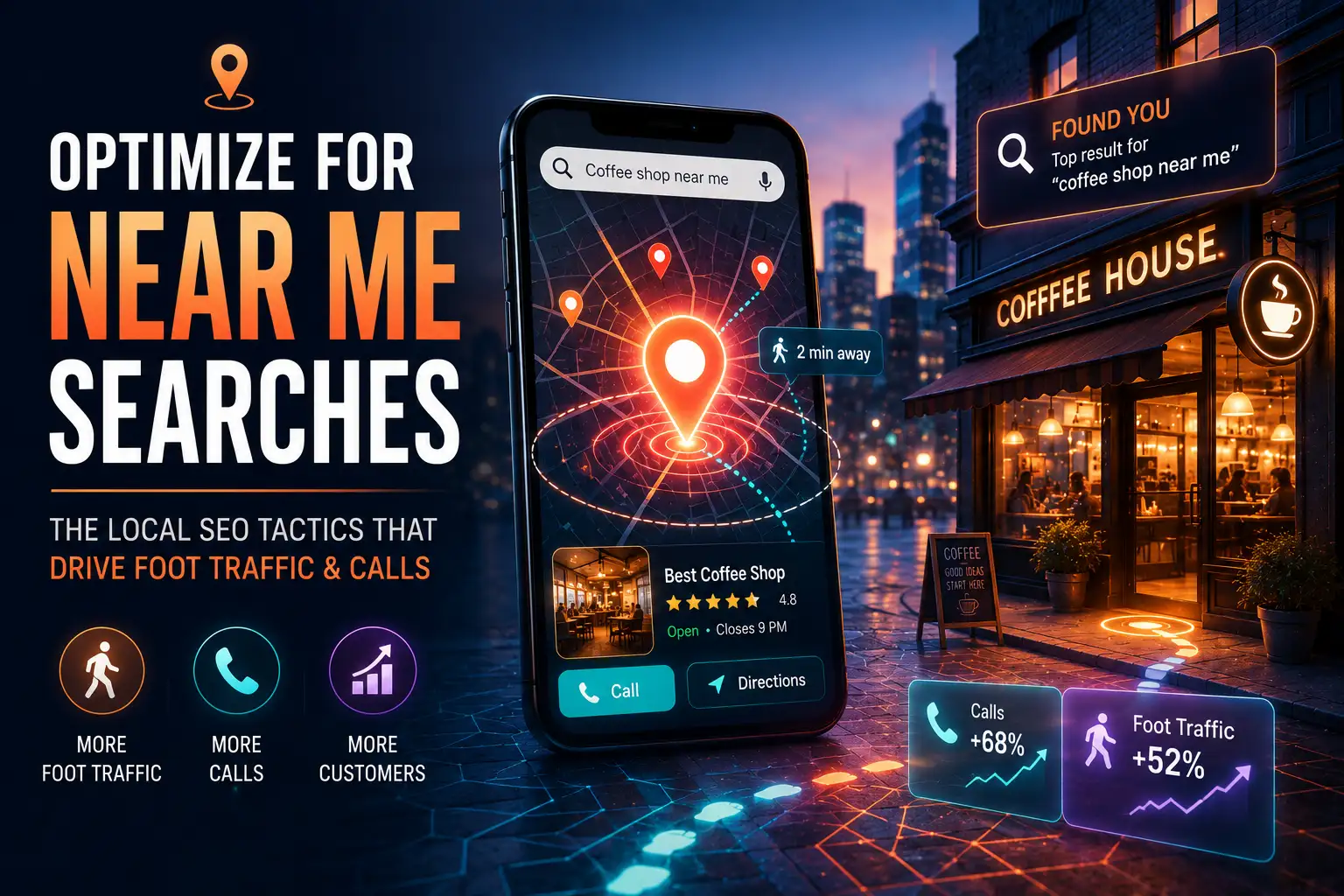
‘Near me’ searches have exploded in recent years and are now among the highest-converting local queries. Learn the specific optimization tactics that ensure your business appears for these urgent, high-intent searches.
“Near me” searches have transformed local commerce. Queries like “coffee shop near me,” “urgent care near me,” and “auto repair open near me” represent some of the highest-intent, highest-converting searches in local SEO people using these queries have an immediate need and are ready to act the moment they find a business that meets their criteria. Ensuring your business appears prominently for relevant “near me” searches is one of the highest-value local SEO priorities available to any business with a local customer base.
The foundational “near me” optimization requirement is an accurate, complete Google Business Profile with a verified physical address or precisely defined service area. Google determines “near me” results primarily through its proximity algorithm it serves businesses that are geographically closest to the searcher for the queried category. You cannot directly control your proximity to searchers, but you can ensure your business is correctly positioned in Google’s geographic database through accurate GBP location data.
Beyond proximity, the “near me” algorithm weighs relevance and prominence heavily. Relevance is determined by how well your GBP categories, description, and services match the specific query. Prominence is determined by your overall review strength, backlink profile, and citation authority. Businesses that combine geographic proximity with strong relevance and high prominence scores dominate “near me” results in their categories.
Interestingly, “near me” queries rarely include a city or neighborhood name the location context is implicit. This means your content and listing optimization should not rely on having specific city names in “near me” query contexts. Instead, focus on the category relevance signals that determine whether your business is considered for the query: primary GBP category selection, service descriptions, review content that frequently mentions your service type, and on-page content that clearly establishes your service category.
Mobile optimization is inseparable from “near me” SEO. These searches happen overwhelmingly on mobile devices, often when consumers are already in motion. Ensuring your website loads instantly on mobile, that your phone number is tap-to-call, and that your address links immediately to map navigation removes the friction points that cost you conversions even after you’ve earned the search ranking.
Frequently Asked Questions
Q: Can service-area businesses that don’t have a visible physical address rank for ‘near me’ searches?
A: Yes, but with additional challenges. Google uses service-area business settings to determine geographic relevance for SABs, and these businesses typically have a weaker proximity signal than businesses with verified physical addresses. Building strong prominence signals reviews, citations, content authority is especially important for SABs competing in “near me” results.
Q: Does including ‘near me’ in my website content or listing descriptions help?
A: No and this is a common misconception. Google doesn’t match the phrase “near me” to businesses that use it in their content; it determines “near me” results through its real-time location algorithm. Including “near me” in your content does not improve your “near me” ranking and may appear spammy.
Q: How do I track whether my business is appearing for ‘near me’ searches?
A: Google Search Console will show impressions for “near me” queries in your performance report if your business is receiving traffic from them. GBP Insights also shows “discovery” search data that includes near me queries. Local rank tracking tools like BrightLocal allow you to check rankings from specific geographic coordinates to simulate “near me” search results.