
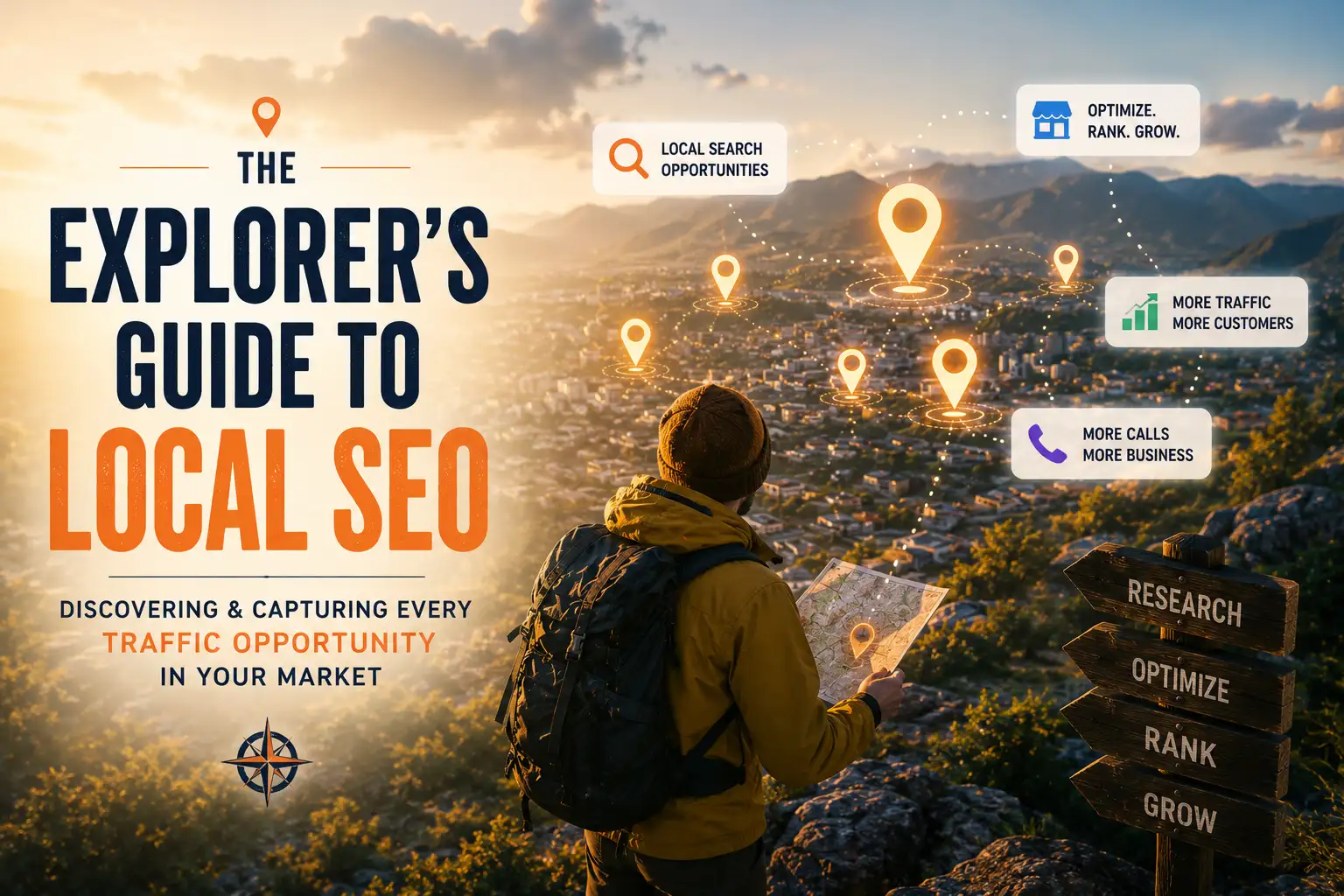
Local SEO isn’t a single tactic it’s a map of opportunities. Learn how to explore and capture every traffic source available to your business, from Google Maps to AI assistants and beyond.
Think of local SEO not as a checklist but as a map a map of all the places where your potential customers might be searching for a business like yours. Every platform, every search surface, every directory, every review site is a territory on that map. The most successful local businesses aren’t those that pick one territory and dominate it; they’re those that strategically claim meaningful presence across as many territories as the map offers.
The largest and most valuable territory is Google: the local three-pack, organic search results, Google Maps, and increasingly, AI Overviews. This territory deserves the most attention and investment, but it should never be your only presence. Over-reliance on a single platform creates dangerous fragility algorithm changes, profile suspensions, or increased competition can dramatically reduce your visibility overnight if Google is your only source of local search traffic.
The second-tier territories Bing, Apple Maps, Yelp, Facebook, and industry-specific directories collectively represent a significant share of local searches and referrals, particularly among demographic groups who favor specific platforms over Google. Claiming and maintaining your presence in these territories takes minimal ongoing effort but provides durable additional visibility that compounds over time.
Directory territories like City Explorer Pro function as discovery surfaces, citation sources, and social proof aggregators simultaneously. A well-maintained listing doesn’t just drive direct traffic it feeds the data ecosystems that power voice search, AI recommendations, and local pack ranking. Every territory you occupy on the local search map reinforces every other territory you’re in.
Content territories your website’s blog, FAQ pages, and service pages are the territories over which you have the most control and where you can build the deepest, most durable presence. Content that genuinely answers your customers’ questions, provides locally specific expertise, and builds authority in your service category creates ranking opportunities that no competitor can easily replicate.
The exploration mindset applied to local SEO means continuously identifying new territory opportunities new directories to claim, new content topics to address, new communities to engage rather than resting on the territories you’ve already claimed.
Frequently Asked Questions
Q: How do I decide which new local search territories to explore first?
A: Prioritize by audience overlap with your target customers. Research which platforms your ideal customers actually use to find businesses like yours, and prioritize those. A restaurant should prioritize Yelp and OpenTable over generic business directories; a contractor should prioritize Angi and Houzz.
Q: Is it worth maintaining presence on multiple platforms if most of my leads come from Google?
A: Yes, for two reasons. First, platform diversity creates citation authority that reinforces your Google ranking your multi-platform presence makes you more visible on Google, not less. Second, consumer search behavior shifts the platform generating 80% of your leads today may only generate 50% two years from now as AI and alternative search surfaces grow.
Q: What’s the minimum viable local search presence for a very small business with limited time?
A: Fully optimize your Google Business Profile, create listings on two to three additional high-authority platforms in your category, and maintain your core NAP consistency across them. This foundation achievable in a few hours covers the majority of local search visibility territory with the least ongoing maintenance burden.